
Free Agile Retrospective Templates
Choose the right retrospective format for your team. Explore the most popular Agile retrospective templates and learn when to use each one.
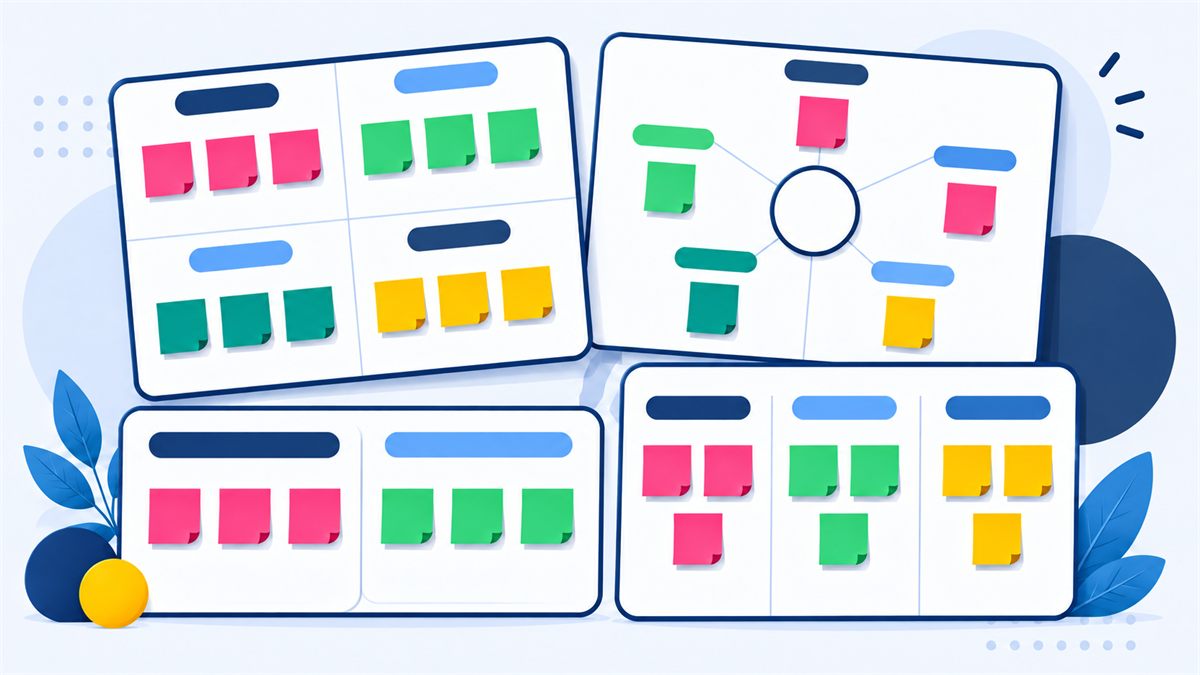
A retrospective template gives your team a shared structure for reflecting on the sprint. Rather than starting with a blank board, templates provide focused categories that guide the conversation and help surface the right insights. Different templates work better at different stages of team maturity, morale, and goals.
BugNBrag includes all of the templates below — no setup needed. Create a free session and choose a template to get started in seconds.
Popular Retrospective Templates
Start Stop Continue
Three focused columns — what to start, what to stop, and what to keep doing. Simple, actionable, and effective for any team.
- Great for all maturity levels
- Action-oriented and easy to run
- Balanced positive and constructive feedback
Mad Sad Glad
An emotion-based format that surfaces how the team feels about the sprint — frustrations, disappointments, and wins.
- Builds psychological safety
- Great when morale or tension is high
- Surfaces issues before they escalate
Rose Thorn Bud
A garden-inspired format: Roses are successes, Thorns are challenges, and Buds are opportunities not yet explored.
- Visually intuitive for new teams
- Highlights future growth potential
- Encourages a growth mindset
4Ls Retrospective
Captures what was Liked, Learned, Lacked, and Longed For — covering satisfaction, growth, gaps, and desires.
- Encourages reflective learning
- Balances positives with constructive gaps
- Good for knowledge-sharing teams
Sailboat
A visual metaphor: wind pushes you forward, anchors slow you down, rocks ahead are risks, and the island is your goal.
- Highly engaging and visual
- Great for goal-focused discussions
- Surfaces risks and blockers clearly
Starfish
Five categories: Start Doing, Stop Doing, Keep Doing, More Of, and Less Of — more nuanced than Start Stop Continue.
- Finer-grained feedback than SSC
- Great for experienced Agile teams
- Surfaces subtle adjustments
BugNBrag (Default)
BugNBrag's signature format with Bugs, Brags, Action Items, and Kudos. See examples →
- Focused on bugs and wins
- Built-in kudos for recognition
- Clear action item tracking
How to Choose the Right Retrospective Template
The best template is the one that fits your team's current situation. Here are some guidelines to help you decide.
For new or less experienced teams
Start with Start Stop Continue or Rose Thorn Bud. These formats are intuitive and require no prior retrospective knowledge.
When team morale is low or tension is high
Use Mad Sad Glad. Giving people space to name frustrations builds psychological safety and surfaces problems before they fester. The Mad, Sad, Glad retrospective guide explains how to facilitate that conversation constructively.
When the team feels stuck or blocked
Try Sailboat. Visualizing what's propelling you forward versus what's anchoring you is a powerful way to identify systemic issues. The Sailboat Retrospective guide explains every element, with examples and facilitation steps.
For a simpler balance of success, opportunity, and challenge, use the Rose, Bud, Thorn Retrospective guide.
For mature Agile teams seeking deeper insight
Starfish or 4Ls encourage more nuanced reflection and help experienced teams make subtle, high-impact adjustments. The Starfish guide explains its five categories, while the 4Ls Retrospective guide focuses on appreciation, learning, unmet needs, and opportunities.
To keep retrospectives fresh
Rotating templates prevents retrospective fatigue. If your team has used the same format for several sprints, switching formats re-energizes participation and surfaces different types of feedback.
New to the three-column format? The Start, Stop, Continue retrospective guide includes practical examples, facilitation steps, and advice for turning responses into action items.
Ready to run your next retrospective?
All templates are built into BugNBrag — free, no account required.
🚀 Create Free Session