Rose
Achievements and practices the team values and wants to protect.
- A successful feature delivery.
- Excellent teamwork across roles.
- Positive customer feedback.
- Improved sprint planning.
- A faster deployment process.

Celebrate what is flourishing, notice promising opportunities, and address the challenges standing in your team's way.
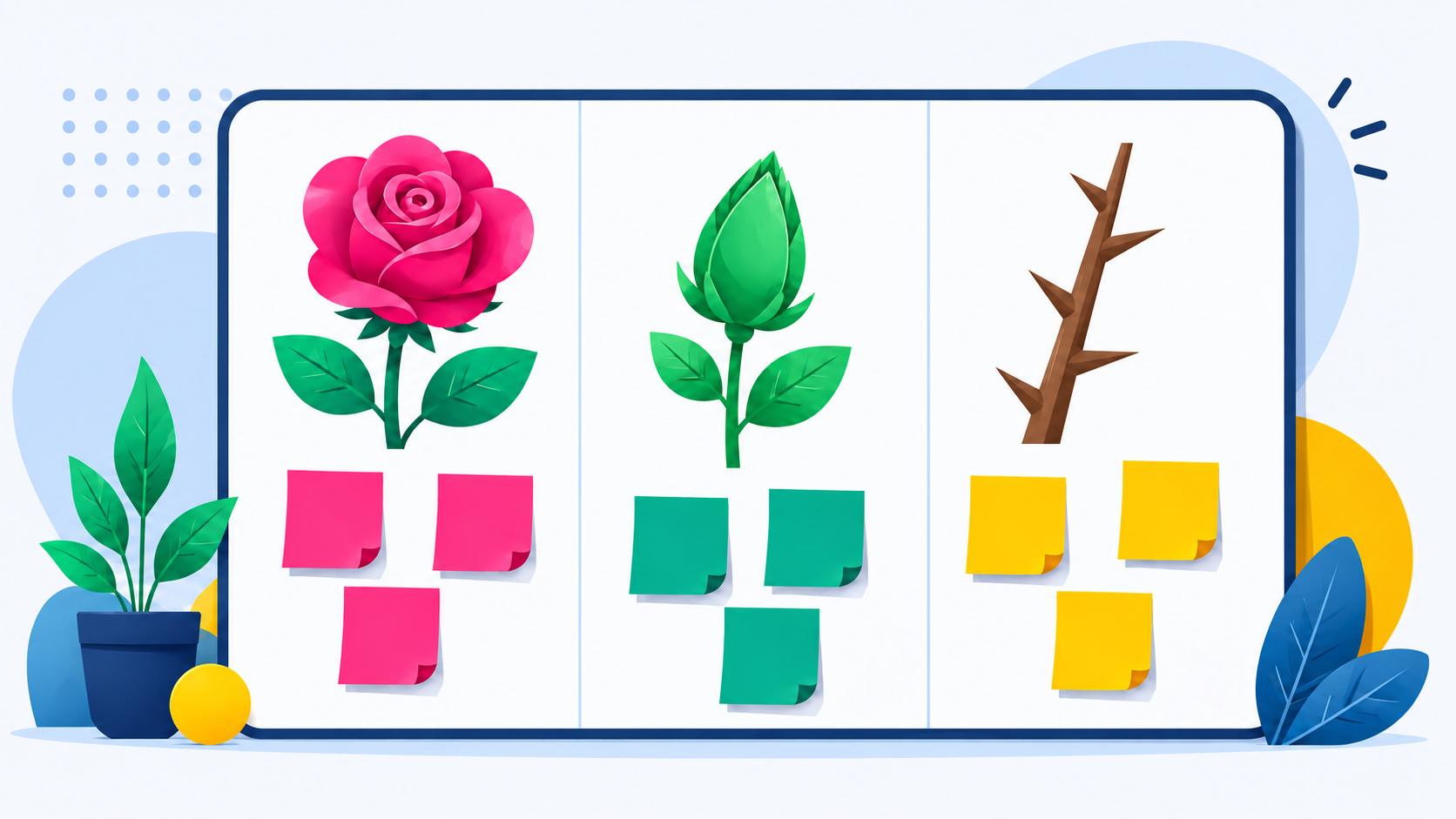
Rose, Bud, Thorn is a balanced Sprint Retrospective technique. Roses are successes worth recognizing, buds are promising opportunities that could grow, and thorns are challenges that need attention.
Teams use the format when they want an optimistic but honest review. It works especially well after a release, a period of change, or a sprint containing both meaningful progress and unresolved friction. Looking at all three categories prevents problems from overshadowing achievements and keeps future possibilities visible.
Achievements and practices the team values and wants to protect.
Early ideas and opportunities with the potential to improve future work.
Obstacles and pain points the team should understand and address constructively.
Use specific What Went Well examples to describe roses and constructive What Didn't Go Well examples to discuss thorns without assigning blame.
Follow BugNBrag's Sprint Retrospective best practices to support psychological safety and follow-through. These retrospective examples can help participants write specific cards.
A retrospective icebreaker can establish a positive tone. Distributed groups can apply the participation guidance for remote Sprint Retrospectives.
Choose Rose, Bud, Thorn for a simple, forward-looking conversation. Use Start, Stop, Continue for direct process decisions, Mad, Sad, Glad for emotional impact, Sailboat for goals and risks, Starfish for finer adjustments, or the 4Ls Retrospective when learning and unmet needs deserve special attention.
Explore a live board with representative successes, opportunities, and challenges already prepared.
Free. No account. No setup. Just balanced reflection and practical action.
Create Free Session