The Boat
The boat represents the Scrum team and its shared work. Its position encourages the team to consider current progress without judging individual performance.

Give your team a shared picture of its destination, momentum, obstacles, and risks—then choose a realistic improvement for the next sprint.
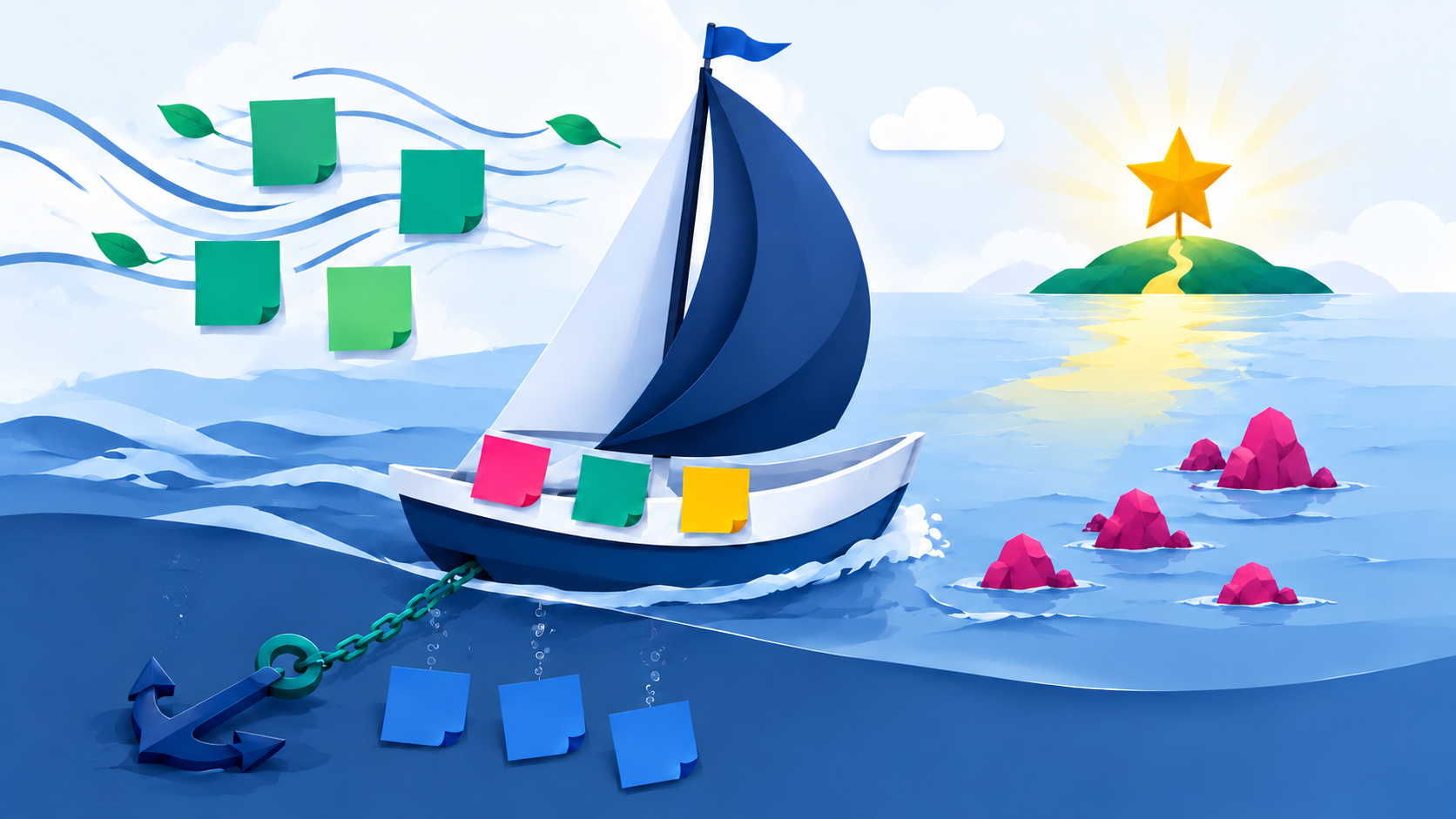
The Sailboat Retrospective is a visual Sprint Retrospective technique that represents the team as a boat traveling toward an island. Wind moves the boat forward, anchors slow it down, and rocks represent risks ahead. The picture gives people an approachable way to discuss goals, helpful forces, current obstacles, and future threats in one exercise.
Teams often use Sailboat when planning around an important goal, reviewing a complicated sprint, or looking beyond past events to upcoming risk. Identifying momentum and obstacles together creates a balanced conversation: the team can protect what helps, remove what slows progress, and prepare for what could disrupt the journey.
The boat represents the Scrum team and its shared work. Its position encourages the team to consider current progress without judging individual performance.
The island is the destination: a sprint goal, product outcome, or better way of working the team wants to reach.
The wind captures forces that create momentum and should be protected or strengthened.
Anchors are present obstacles that slow the team or make progress harder.
Rocks are visible risks the team may encounter if it does not prepare.
Wind often resembles specific What Went Well examples, while anchors benefit from the neutral language used in constructive What Didn't Go Well examples. Rocks are different from anchors because they describe what may happen next rather than what is already slowing the team.
Review additional Sprint Retrospective examples for ways to write focused cards. Teams that prefer direct process prompts can compare Sailboat with the Start, Stop, Continue retrospective.
The guidance in Sprint Retrospective best practices supports psychological safety and follow-through. A brief retrospective icebreaker can help participants engage with the metaphor, while remote retrospective practices ensure distributed team members have equal time to contribute.
Sailboat works best when a team wants an engaging visual format, needs to connect current experience with a shared destination, or wants to discuss future risks alongside existing obstacles. For an intense sprint where emotions need direct attention, the Mad, Sad, Glad retrospective may create more useful space. Choose the format that best supports the conversation the team actually needs.
Explore a hands-on demonstration with the Sailboat board and representative sample cards already prepared.
Free. No account. No setup. Just a visual path from reflection to action.
Create Free Session